04.3 / portal
◆ shipped · multi-brand production
Producer vs. Client Portal
Eight disconnected third-party systems consolidated into a single dual-role enterprise insurance platform. White-labeled, multi-jurisdiction, $38B+ in assets under management.
- Role
- Senior UX Designer · Group 1001 · 18 months ongoing
- Stack
- Enterprise UXInformation architectureDual-CMS architectureWhite-label themingThird-party API orchestrationCompliance workflow design
◆ problem
8+ disconnected third-party systems (Zendesk, BIG, state licensing, commissions). Agents spent most of their time switching between platforms and correlating client data across systems by hand.
◆ solution
Unified dual-role enterprise platform with white-label theming, automated compliance workflows, and a single source of truth serving both agent and client interfaces.
◆ impact
Managed hundreds of thousands of policies and clients across multiple company brands. White-label partnership secured, demonstrating platform validation outside the parent company.
§01 · problem
Agents lived in tab-switching, not in client work.
The enterprise insurance division operated through 8+ disconnected third-party platforms (Zendesk, BIG background checks, state licensing portals, commission systems, document repositories, communication tools). Agents toggled between them constantly. The fragmentation was operational, not just visual.
- Significant agent time spent switching between systems instead of serving clients.
- Correlating client data across the eight systems was a manual, slow exercise that compounded on every customer interaction.
- Manual compliance tracking across state regulatory databases, with no audit trail spanning the systems.
§02 · users
Three audiences, one platform.
Internal agents · insurance professionals managing agent networks, commissions, licensing, and client relationships.
External agents · individual insurance agents needing onboarding, licensing tracking, and policy management.
Clients · end customers needing policy visibility, self-service capabilities, and clear communication.
The design problem was making each audience feel like they had a dedicated product while keeping all three on a single source of truth.
§03 · process
40-week first arc with an 18-engineer team.
Team: 1 product manager, 2 designers, 8 engineers, data architect, compliance specialist.
- research (6 weeks) · stakeholder interviews; workflow mapping across six systems; compliance requirement analysis.
- information architecture (8 weeks) · dual-CMS design; comprehensive wireframes; hierarchical structure for multi-level organizations.
- visual design (12 weeks) · enterprise design system; component libraries; white-label customization framework.
- user testing (8 weeks) · interactive prototypes; multi-stakeholder usability testing; regulatory expert validation.
- implementation (6 weeks) · third-party system integration; API orchestration; real-time data sync; white-label deployment.
§04 · solution
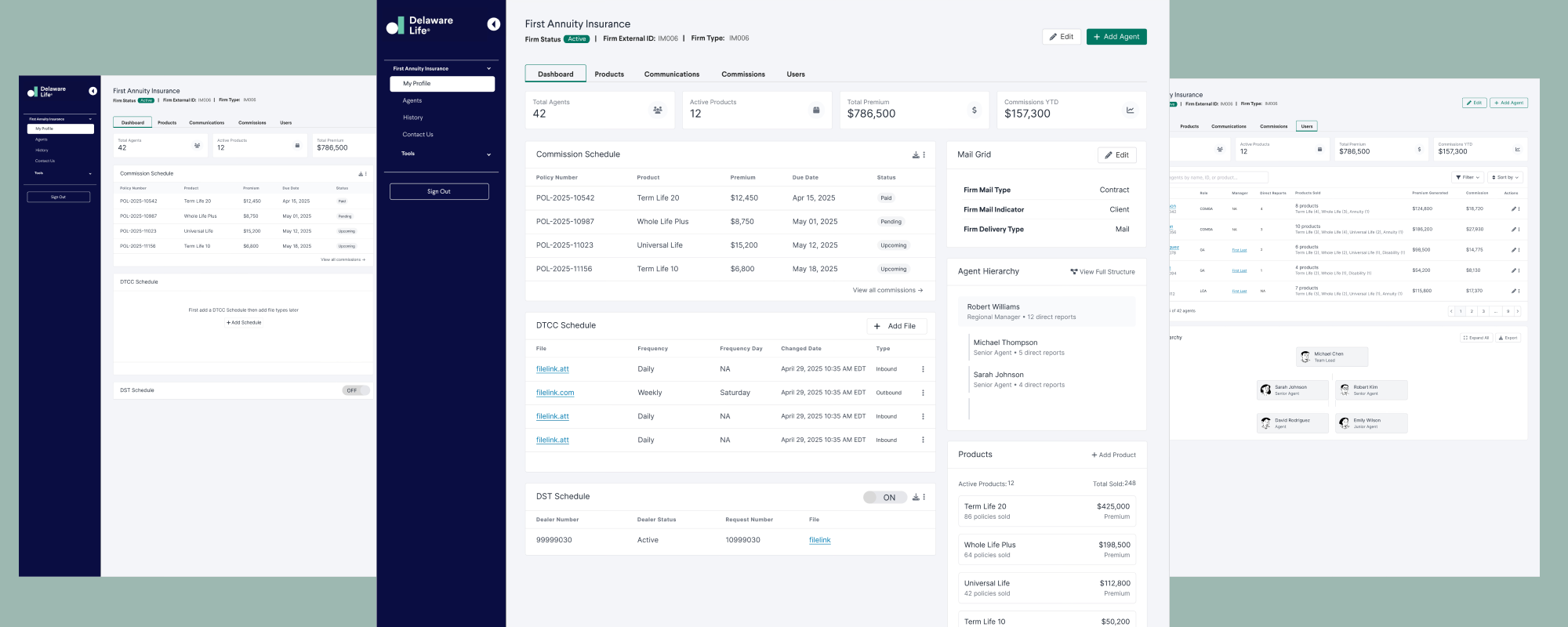
Unified data, role-based surfaces, white-label theming.
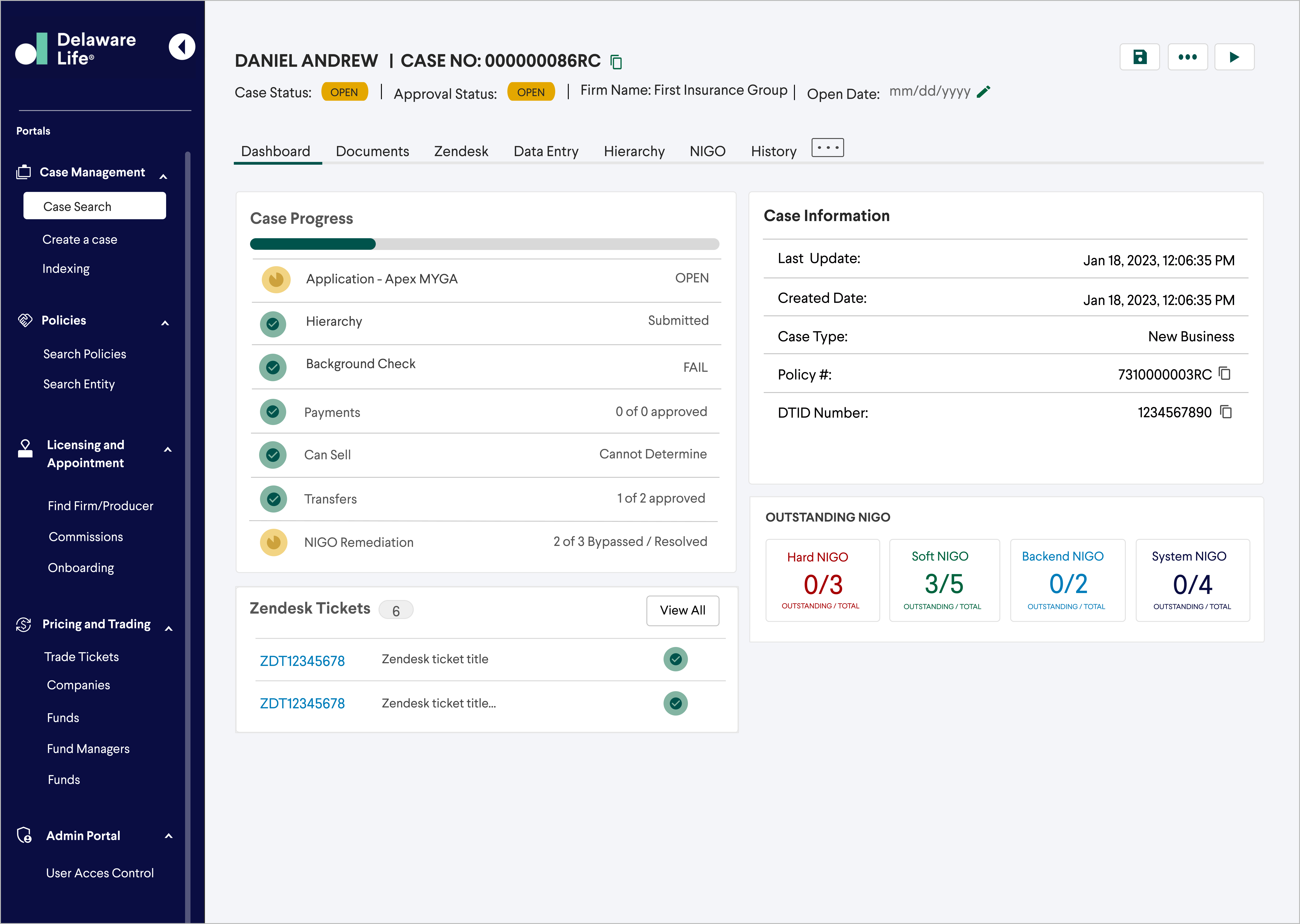
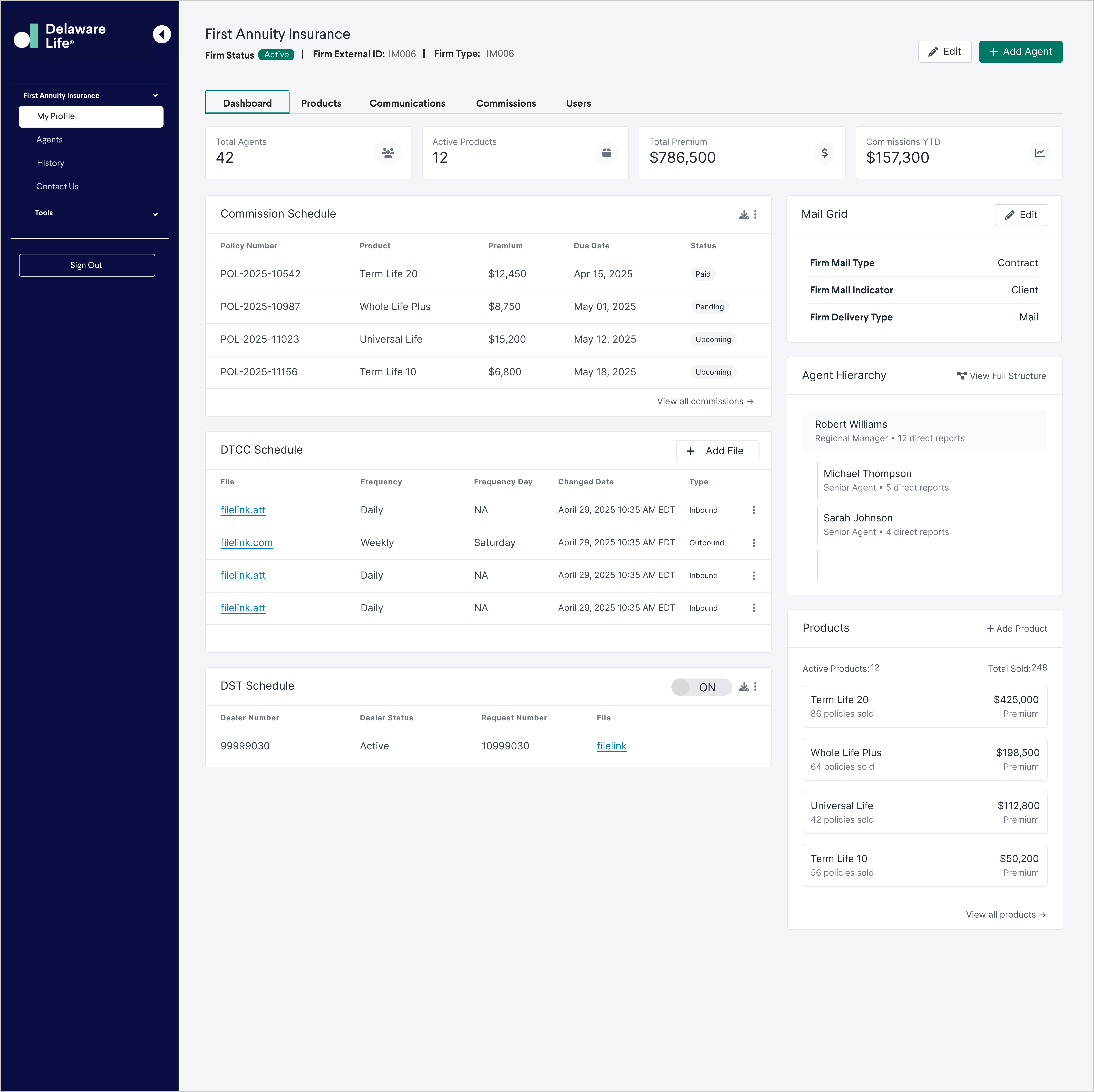
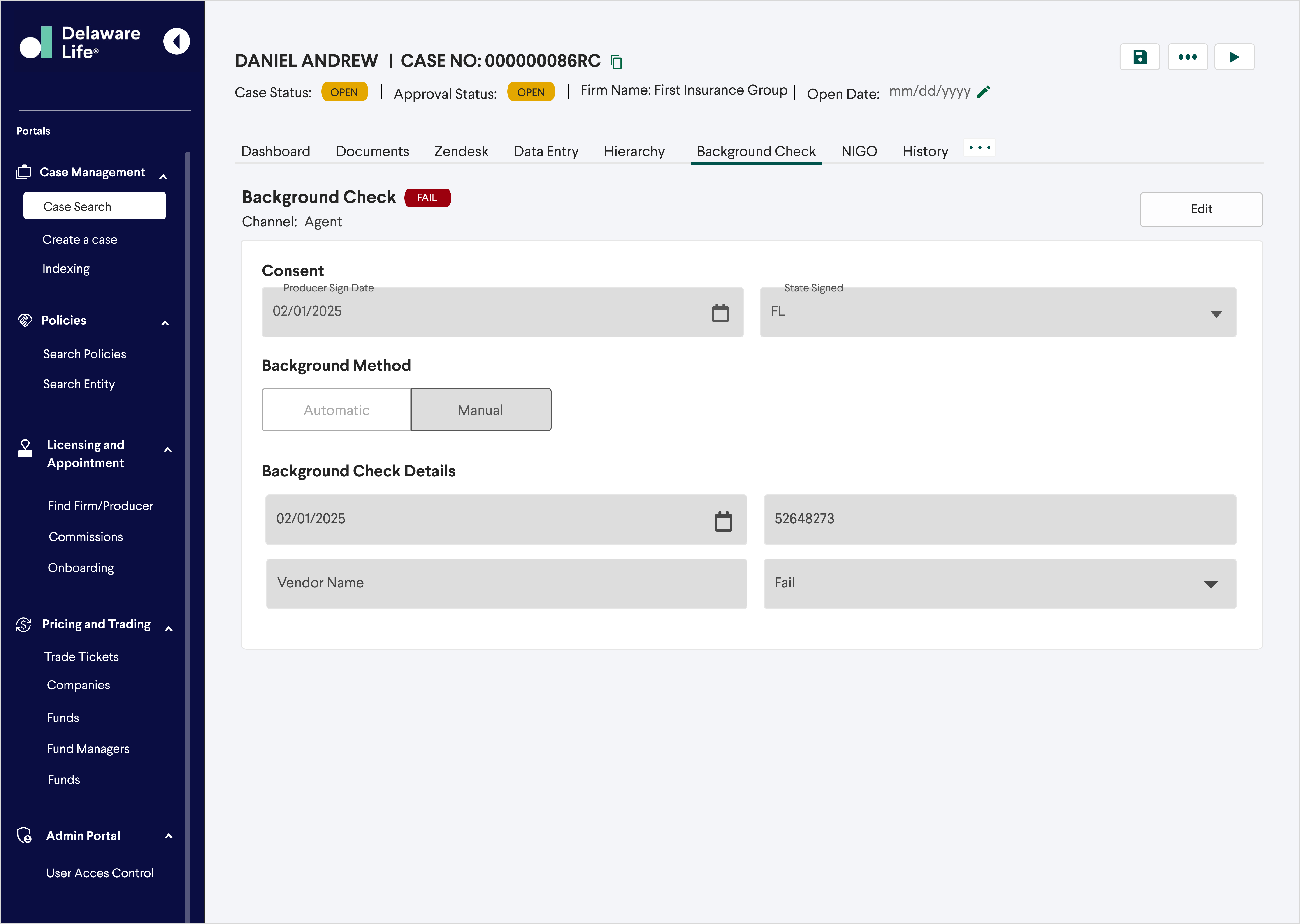
Five architectural decisions:
- unified data architecture · single source of truth serving both agent and client interfaces with appropriate access controls and real-time sync.
- progressive disclosure · basic functions for new users, advanced analytics for experienced agents; same interface, different density.
- white-label architecture · platform designed for brand flexibility across partner customization without forking the core.
- automated workflow integration · compliance and onboarding embedded in the UI, replacing manual checks.
- role-based experience design · distinct but connected surfaces for agents, clients, administrators, with data flowing between roles by permission.
§05 · outcomes
Multi-brand production. White-label validation.
- Managed hundreds of thousands of policies and clients across multiple company brands on a single underlying platform.
- Shipped a substantial feature catalog covering agent hierarchy, commissions, background checks, document management, and client portability.
- Supported two companies operating on the same platform from day one of multi-tenancy.
- White-label partnership secured · external market validation of the architecture.